Articles about Books
Articles about Books Colin Baxter
Table of Contents
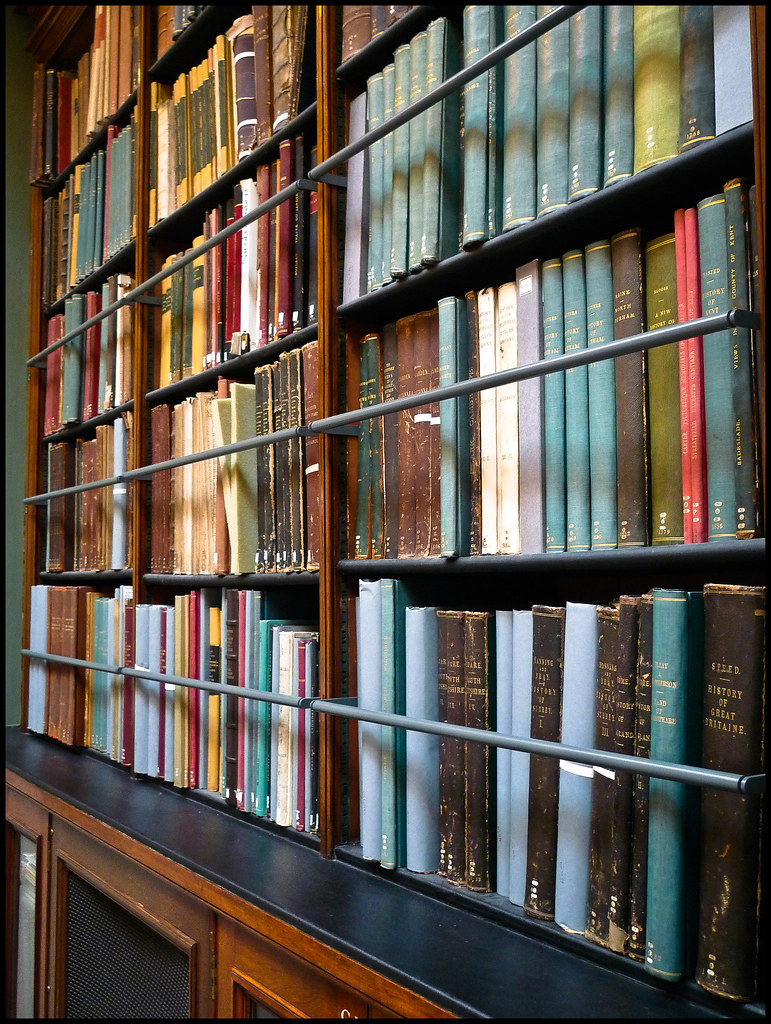
Most of the articles linked to this page are about books I own or would like to own. I love books — and libraries. Like many people I remember with affection the old British Museum Reading Room, and especially the North library with its wonderfully big tables, book cradles and reading lamps. Oddly perhaps, I never felt the same about the London Library even though I was a member for a number of years.
Three Forgotten Books
Sir Joseph Larmor (d. 1942) and Sir Arthur Stanley Eddington (d. 1944) were two outstanding physicists, who in their day were highly regarded by their fellow scientists. They both received national and international Honours and were well known to the wider public. Between them, they wrote three books which today are either ignored, forgotten or unknown.
The Unremembered Library
There is a peculiar melancholy in scanning the shelves of a second‑hand bookshop and lighting upon a title that was once the talk of its day, now sitting silently in the dust. I have often wondered how many hundreds of works – once praised in the pages of The Times Literary Supplement or debated in common rooms – now survive only in the unvisited stacks of university libraries, their spines uncracked for decades. My own predilection for forgotten books is not a scholar’s vice but a reader’s sympathy: I feel a pang of loyalty towards volumes that have been unjustly neglected, and a curiosity to know what they still have to tell us.
The three books by Larmor and Eddington belong to this class. When I first came across them in a job lot purchased at an auction in Suffolk, I was intrigued less by their scientific content – though that is remarkable – than by the sheer weight of intellectual labour they represented. Each page is dense with mathematics and reasoning that aimed to settle some of the deepest puzzles of nature, yet within a generation they were pushed aside by the relentless march of physics. To hold them is to be reminded that the frontier of knowledge is a temporary line, constantly redrawn.

I keep these books not as relics but as companions. They sit on a shelf within arm’s reach of my desk, alongside other unfashionable volumes: an eighteenth‑century treatise on phlogiston, a Victorian manual of telegraphy, a 1920s study of the canals of Mars. Together they form a library of roads not taken, a collection of brilliant dead‑ends that enlarges my sense of what thinking is.
Larmor and the End of Ether
Sir Joseph Larmor’s most substantial book, Aether and Matter (1900), was celebrated in its time as a masterly synthesis of electromagnetism and the theory of a material aether. It is a formidable work, running to over a thousand pages, in which Larmor attempted to construct a consistent mechanical model of the medium that carried light waves and electric forces. His writing is not easy: the prose is tight and algebraic, the arguments cumulative, and the reader is expected to follow a chain of deductions that leaves little room for digression.
What makes the book poignant today is that it was completed just before the great conceptual upheavals of special relativity and quantum theory. Einstein’s 1905 paper made the luminiferous aether unnecessary, and within two decades Larmor’s elaborate scaffolding was dismantled piece by piece. The book remains, however, a testament to the power of a coherent worldview even when that worldview is overturned. I have spent many evenings walking through its pages, and I am struck less by its errors than by the elegance of its ambition. It is a cathedral of the old physics, now empty but still awe‑inspiring.
For a long time I could not bring myself to sell it, though dealers offered modest sums. It bears the bookplate of a now‑defunct theological college in Yorkshire, and inside the back cover someone has pencilled a list of page numbers beside brief notes: “displacement current – check”, “vortex sponge – improbable”. These marginalia humanise the text; they remind us that even an obsolete book was once a living tool in a student’s hands.
Eddington’s Philosophical Quest
Arthur Stanley Eddington is best remembered for his expedition to observe the 1919 solar eclipse and for his masterly popularisation of relativity, but his later philosophical works have fallen into a curious half‑light. Two books in particular – The Nature of the Physical World (1928) and The Philosophy of Physical Science (1939) – are among the most thoughtful attempts by a practising physicist to engage with the broader implications of quantum theory and cosmology. They were hugely influential in their day, yet they are now more cited than read.
I came to Eddington’s philosophy late, after a lifetime of thinking about science only in its practical aspects. What struck me immediately was the clarity of his prose, a clarity that never descended into simplification. Eddington believed that the world of physics is a structure of pointer readings and mathematical relations, and that the familiar qualities of colour, warmth and solidity are supplied by the mind. This view, which he called “selective subjectivism,” is unfashionable today, but I find it intellectually bracing.
The earlier of the two books includes the famous passage about the elephant and the tortoise – a parable on the limits of reductionism – and many of its chapters were originally delivered as Gifford Lectures. I acquired my copy from a circulating library in Edinburgh that was disposing of its older stock. The pages are browned and the binding is loose, yet every time I return to it I discover a new nuance. It is the sort of book one can open at random and immediately be drawn into a line of thought.
Eddington’s latter work, The Philosophy of Physical Science, is more technical and, I suspect, less read. It expands his theory of groups and structures in physics, and it shows him moving further away from the mainstream. I once spent a long winter afternoon in the North Library of the British Museum – the very room I mentioned earlier – working through a chapter on the constants of Nature. The big table gave me space to spread out the book, a notepad, and a cup of coffee (then still permitted). It was an afternoon of perfect concentration, the sort that becomes rarer as one grows older.
Why Books Fade
The neglect into which Larmor and Eddington’s books have fallen is not simply a matter of changing science. There are fashions in reading, as in everything else, and the vigorous, argumentative style of the Edwardian and interwar years now seems foreign to a generation raised on the terseness of the research paper. Moreover, the very success of science has drowned earlier voices: when every textbook teaches the relativistic and quantum synthesis, who has time for the detours and dead‑ends that made the synthesis possible?
Yet I believe there is a deeper reason. A book is a conversation between an intelligence and a reader, and the conversation can only take place if the reader is willing to meet the author on common ground. The ground has shifted beneath Larmor’s feet; his aether requires a conceptual apparatus that we no longer possess. Eddington’s epistemology, while still provocative, demands a patience with philosophical argument that the modern scientist is rarely trained to exercise. In both cases, the books ask more of us than we are prepared to give.
None of this should be taken as a complaint against progress. Science does not stand still, and the best tribute we can pay to Larmor and Eddington is to acknowledge that they were part of a great adventure, even if their particular maps are now superseded. But the books themselves are not merely historical documents; they are performances of reasoning, and like all performances they can be appreciated even after the curtain has fallen.
Collecting the Uncollectible
My own collection of forgotten books has grown not through systematic searching but through a kind of serendipitous accumulation. Bookshops are my happy hunting ground, especially those rambling establishments where the stock is arranged by size rather than subject, and where the proprietor is more interested in a chat than a sale. It is in such places that one stumbles upon a Larmor wedged between a cookery book and a railway timetable.
There is a small‑format copy of Eddington’s The Nature of the Physical World that I prize above the others because it was inscribed by a former owner: “To Margaret, with love, on the occasion of her passing the Higher School Certificate – July 1930.” I often wonder who Margaret was, and whether she ever read beyond the first chapter. The book is otherwise in pristine condition, which suggests not. That untouched state is somehow part of its charm.
I do not collect first editions, partly from economy and partly because a book that has been read many times appeals to me more than one that has been preserved in glass. The battered spine, the dog‑eared page, the coffee‑ring on the title page – these are evidence of use, of a previous reader’s engagement. They make the object warmer, more companionable.
The Pleasure of the Obscure
There are readers who measure a book’s worth by its currency; I prefer the opposite test. To pick up a volume that has been out of fashion for eighty years is to perform a small act of defiance against the tyranny of the new. It is also, frankly, a source of pleasure. The forgotten book does not clamour for attention; it waits, and the discovery feels like a private triumph.
My fondness for the British Museum Reading Room, which I mentioned earlier, is bound up with this feeling. That great circular space, with its serious hush and its smell of old paper, was a temple to the book as an enduring object. The North Library, with its individual desks and heavy lamps, offered a particular sort of privacy in the midst of a crowd. I once spent a whole day there, tracking down references in a 1911 issue of The Observatory magazine, and emerged into the evening with the satisfied exhaustion that follows a long walk in good country.
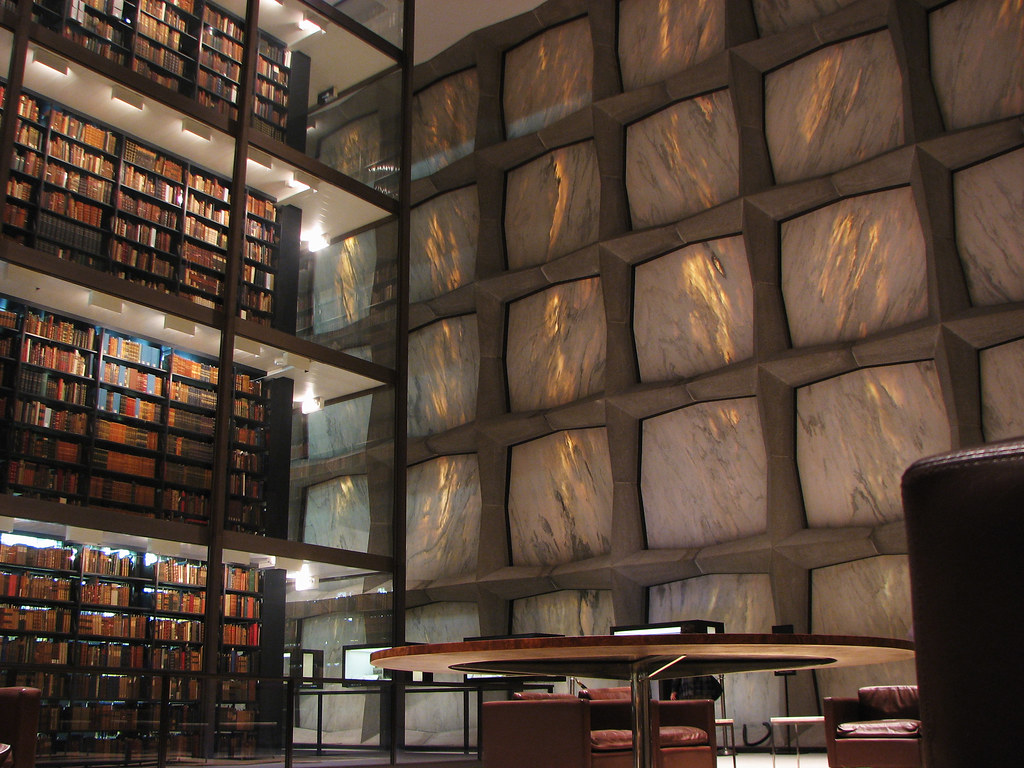
Libraries are themselves collections of forgotten books, of course, and the fact that a volume sits largely unread on a shelf does not mean it is useless. It stands ready, a reservoir of knowledge that can be tapped when the time is right. The three books by Larmor and Eddington are such reservoirs. They belong to a period when scientists still wrote for the educated public as well as for each other, and they repay the effort required to enter their world.
I do not claim that everyone should read them. But I do maintain that someone should, and that the act of reading them – however partial, however resistant – is a reminder that the life of the mind is longer and stranger than the latest research paper can convey. So I shall keep them on my shelf, alongside the phlogiston and the Martian canals, and I shall continue to defend their right to be remembered, if only by a few stubborn enthusiasts.