Academic Overview
- Editorial
- 22 Jul, 2026
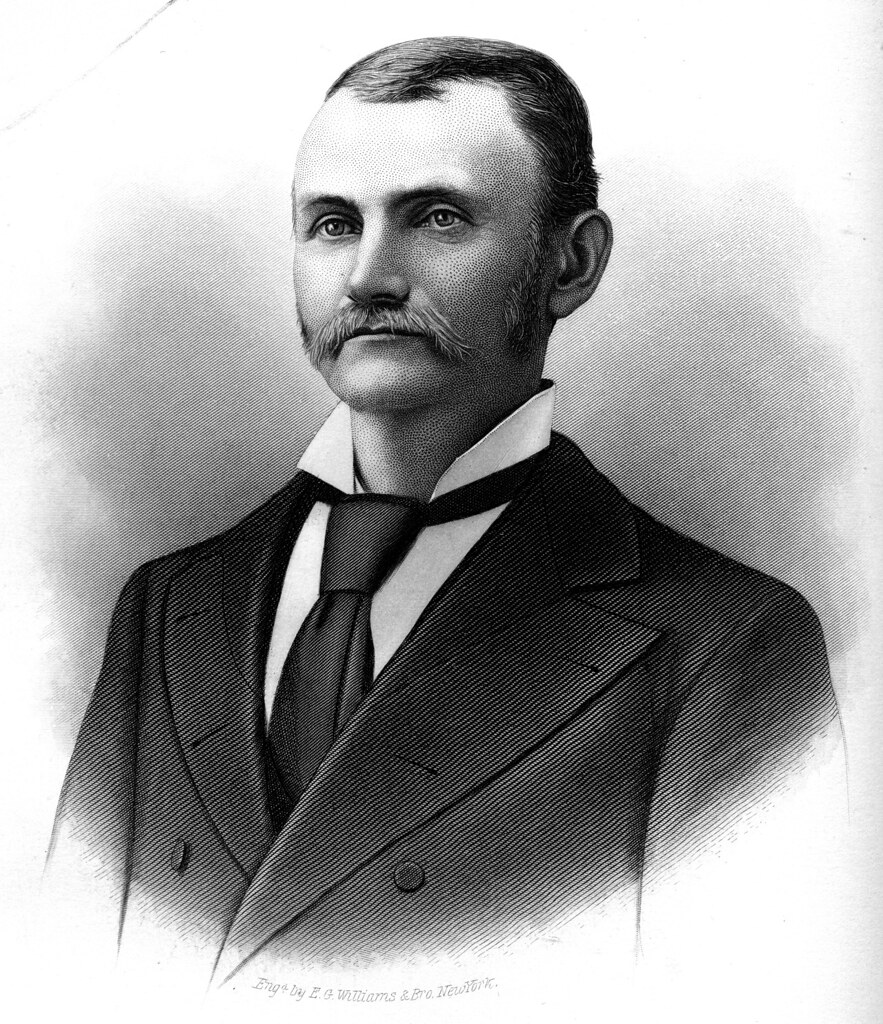
At the intersection of deep theoretical inquiry and committed pedagogy, Colin Baxter has built an academic career that bridges the complex world of quantum physics with the eager minds of students. His work as a university lecturer and researcher is driven by a fascination with the fundamental workings of the universe, and a parallel passion for making those concepts accessible to learners at all levels. This overview explores the twin pillars of his academic life: groundbreaking research in theoretical quantum mechanics and a multifaceted teaching practice that spans lecture halls, online platforms, and introductory courses for non-specialists.
Research at the Frontiers of Theoretical Quantum Physics
Theoretical quantum physics remains one of the most vibrant and intellectually demanding areas of modern science. It probes the behaviour of matter and energy at the smallest scales, where intuition often fails and mathematics becomes the primary guide. Researchers in this field grapple with questions that have philosophical as well as physical implications: What is the nature of reality? How do quantum systems interact with classical observers? Can quantum effects be harnessed for new technologies? Colin Baxter’s research programme engages directly with these foundational challenges.
His work encompasses the development of mathematical models to describe exotic quantum phenomena, from entanglement and superposition to the dynamics of many-body systems. A significant portion of his effort is directed towards rigorous theoretical analysis, often employing advanced techniques from algebra, analysis, and geometry. By constructing and solving these models, his research contributes to a deeper understanding of the quantum world, and sometimes suggests novel experiments for testing the limits of our current theories.
Over the years, this research has led to a series of publications in respected peer-reviewed journals—a body of work that can be explored in detail on the Physics Articles page. These contributions have earned recognition from the wider scientific community and have formed the basis for successful grant applications, which in turn have sustained and expanded the scope of his investigations.

A Record of Successful Grant Acquisition
In the competitive ecosystem of academic research, the ability to secure funding is both a marker of scientific promise and a practical necessity. Colin Baxter has a proven track record of writing successful bids for research grants. These proposals, rooted in clear scientific objectives and innovative methodologies, have repeatedly convinced funding bodies of the value and feasibility of his projects.
“Securing a grant is not just about the funding; it’s a vote of confidence in the curiosity-driven journey of discovery.”
Winning a grant is rarely the end of the story. It initiates a cycle of accountability, delivery, and dissemination. The funds have enabled the purchase of computational resources, supported travel to international conferences, and provided stipends for early-career researchers who contribute fresh perspectives to ongoing work. The grant-writing process itself sharpens a scientist’s focus, demanding a distillation of complex ideas into lucid, compelling narratives. This skill—translating high-level concepts into language accessible to non-specialist panels—mirrors the pedagogical clarity that Baxter brings to his teaching.
Teaching Philosophy: From Lecture Hall to Digital Classroom
Colin Baxter’s extensive university teaching experience forms a pillar of his academic identity that is as robust as his research. Having taught across a broad spectrum of levels, from introductory physics for non-majors to advanced theoretical modules for doctoral candidates, he has developed a teaching philosophy centred on adaptive clarity. He believes that while the content changes, the core goal remains the same: to guide students from confusion to comprehension, and ideally to curiosity.
In advanced theoretical physics courses, this means helping students navigate the abstract formalisms of quantum field theory, general relativity, or statistical mechanics. He structures his courses to build mathematical competence alongside physical intuition, often weaving in historical context and contemporary research directions to show that physics is a living, evolving discipline. For entry-level students, the challenge is different: one must distill the essence of a phenomenon without leaning on the mathematical machinery that experts take for granted. Here, Baxter employs analogies, demonstrations, and carefully scaffolded problems to construct a sturdy conceptual framework.
Developing Online Course Material for a Wider Audience
The digital age has transformed the landscape of education, and Colin Baxter has been an active participant in this shift. Recognizing that many learners—whether constrained by geography, time, or background—could benefit from high-quality physics instruction, he has invested time in creating extensive online course materials. These resources cover a spectrum that mirrors his in-person teaching: from rigorous treatments of advanced topics to gentle introductions for beginners.
His online offerings in advanced theoretical physics presume a solid undergraduate foundation and take learners into the depths of quantum mechanics, mathematical methods, and beyond. Conversely, his non-technical courses strip away the equations to reveal the conceptual heart of physics. Through these, audiences with no formal scientific training can explore mind-bending ideas such as quantum indeterminacy, black holes, and the arrow of time. The materials often include:
- Detailed lecture notes with worked examples
- Recorded video explanations that break down complex derivations
- Interactive problem sets with automated feedback
- Discussion forums to foster a learning community
This commitment to open, accessible education ensures that his pedagogical reach extends far beyond the physical campus.
Inspiring the Next Generation: University Entrance-Level Physics
The gateway to a degree in the physical sciences is often a first-year university course in physics. For many students, this experience determines whether they will pursue the subject further or walk away convinced it is not for them. Colin Baxter brings particular energy to these university entrance-level physics courses, aware that his teaching can open doors—or inadvertently close them. His approach is deliberately inclusive, aiming to demystify physics and reveal its relevance to a wide range of disciplines and everyday life.

Rather than front-loading his courses with vector calculus, he starts with the questions that physics sets out to answer. Why does a ball arc through the air? How does a magnet work? What keeps the Earth in orbit? Only after curiosity is kindled does he introduce the mathematical language that makes quantitative predictions possible. This narrative-driven, concept-first pedagogy helps students from diverse academic backgrounds to see physics not as a barrier but as a versatile toolkit for understanding the world.
Student feedback consistently underscores the value of this approach, often noting his patience and his knack for making the abstract tangible. For many, that initial course becomes the foundation upon which they build a successful career in science, engineering, or education—a testament to the profound impact of skilled teaching at the threshold of higher education.
Publications and Academic Resources
For those interested in a deeper dive into Colin Baxter’s academic output, this website provides a structured pathway. His peer-reviewed journal articles, conference proceedings, and preprints are catalogued on the Physics Articles page. Monographs, textbooks, and book chapters that reflect sustained, deep investigations into theoretical topics can be found under Physics Books. Additional academic writings, including reviews, commentaries, and miscellaneous publications, are collected on the Physics Others page.
A curated selection of his most significant works, with full bibliographic references and thematic groupings, is presented on the Selected Academic Publications page. Meanwhile, the Bibliographical Data page offers a comprehensive, machine-readable record of his scholarly corpus, including DOIs and abstract information where available. Together, these resources paint a complete picture of a career dedicated to advancing the frontiers of theoretical quantum physics and sharing that knowledge through outstanding teaching.
To learn more about the individual behind the work—his background, interests, and professional journey—visit the About Colin Baxter page.