About Colin Baxter
- Editorial
- 04 Jul, 2026
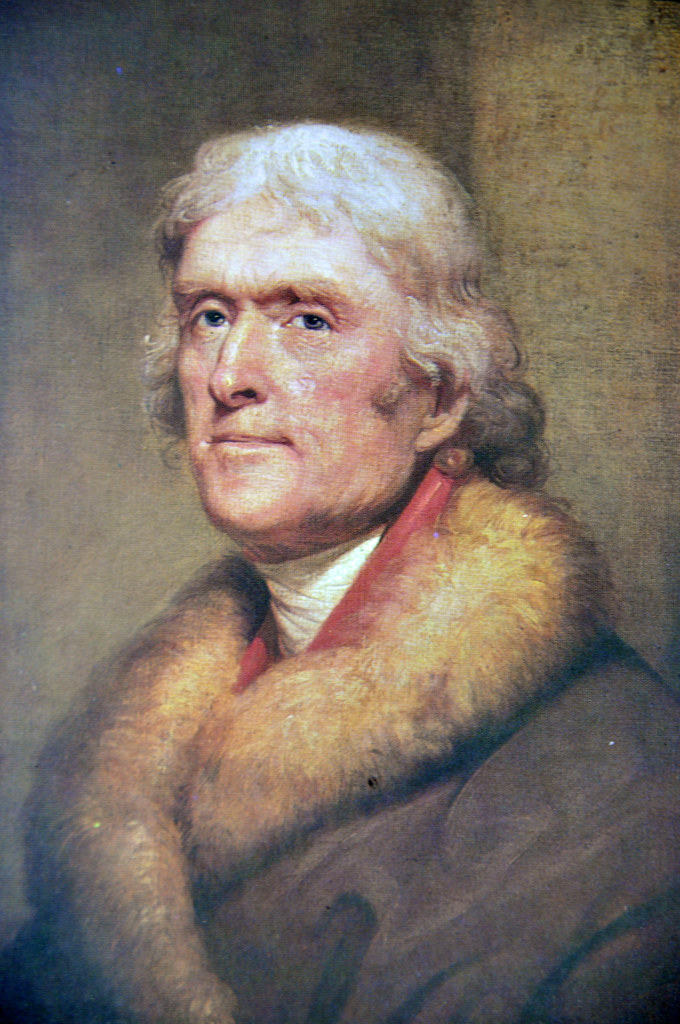
Colin Baxter BSc MSc PhD End hiding photograph, etc. --> Colin graduated with a Batchelor degree in physics and trained as a chemical physicist at what is now BAE Systems. After volunteer work overseas with the United Kingdom agency VSO, he obtained his Master and Doctorate degress in theoretical physics from the University of Essex. Colin's academic research interests include quantum optics and quantitative finance. He has published widely in leading academic journals.
Some Recent Activities Researched radiation pressure in dielectrics, the photon-drag effect ... more Provided successful expert-witness testimony involving radiation from a mobile phone (cellphone) transmitter mast (tower) ... more Produced a study of the potential exploitation of radiation pressure in nanotechnology ... more Cultivating awareness among investors of the dangers of environmental issues to nanotechnological development ... more investigating the potential of a recently devised theory of financial markets end hiding -->
Professional Visibility Colin's academic research has been published in Physical Review Letters, Physical Review, Journal of Physics, Annals of Physics and the Journal of Modern Optics.
He has also contributed to magazines and newspapers, including the New Scientist and the Financial Times, and to BBC Radio.
Communities of Experience "I am always keen to meet and talk to business, voluntary and spiritual organizations. Such occasions provide not-to-be-missed opportunities to listen to the views and problems faced by others, as well as refreshing one's own ideas."
Academic Roots and Research Philosophy
Colin Baxter's academic path begun with a solid foundation in physics at the undergraduate level, followed by immersive hands-on research at what was then BAE Systems. During this period, he cultivated a rigorous approach to theoretical and experimental physics, which later informed his doctoral work at the University of Essex. Under the guidance of leading figures in the field, he delved into the complexities of quantum optics, a discipline demanding both mathematical precision and conceptual creativity. This early training instilled in him a lasting respect for the delicate interplay between abstract theory and observable phenomena.
Throughout his career, Colin has maintained that true scientific progress often arises from crossing traditional boundaries. Whether probing the quantum behaviour of light or modelling the erratic movements of financial markets, he applies the same methodological rigour and curiosity. His interdisciplinary mindset fosters innovation, enabling connections that narrower specialisation might overlook. This philosophy is reflected not only in his diverse publication record but also in his active collaboration with colleagues from engineering, economics, and the environmental sciences.
"The most valuable discoveries often hide at the intersections of fields—where physics meets finance, or optics touches public policy. Bridging these worlds is not just an academic exercise; it is where real-world impact begins."
To explore the breadth of his academic output, you can view the Academic Overview or browse the Physics Articles collection.
Quantum Optics and the Mechanics of Light
One of Colin's primary research domains is the study of radiation pressure in dielectric media and related effects such as the photon-drag phenomenon. Radiation pressure—literally, the force exerted by light on matter—has deep implications in both fundamental physics and emerging technologies. Colin's theoretical analyses have shed light on how electromagnetic momentum is partitioned between the field and the medium, a question that has stirred debate since the time of Minkowski and Abraham. His contributions have been recognised through publications in leading journals like Physical Review Letters and Journal of Modern Optics.
In a series of papers, he explored boundary conditions and pulse-propagation effects, offering clarity on long-standing ambiguities. This work not only refined existing models but also opened pathways toward practical applications, such as optical manipulation of small particles and the design of novel nanophotonic devices. His ability to translate abstract theoretical constructs into experimentally testable predictions underscores his rare combination of deep mathematical skill and physical intuition.
For a comprehensive list of his physics publications, refer to the Bibliographical Data page, where articles are categorised by topic and chronology.
Quantitative Finance and Theory of Markets
Venturing beyond traditional physics, Colin has applied his analytical toolkit to the realm of quantitative finance. Recognising that financial markets, much like many-body physical systems, exhibit complex, often counterintuitive dynamics, he has worked on developing theoretical frameworks to model and understand market behaviour. His research investigates the potential of a recently devised theory that links market fluctuations to underlying informational and structural factors, challenging classical efficient-market hypotheses.
In this cross-cutting work, Colin draws analogies between thermodynamic variables and economic indicators, and uses stochastic processes familiar from statistical mechanics to describe price formation. While acknowledging the fundamental differences between physical and economic systems, he insists that the physicist’s emphasis on simplicity, universality, and empirical grounding can inject fresh rigour into financial economics. His publications in this area have been presented at interdisciplinary conferences and have attracted interest from both academic economists and investment professionals seeking deeper insight into market instability.
Additional details and selected papers can be found in the Selected Academic Publications section.
Expert Witness and the Interface of Science and Law
Colin's expertise in electromagnetic radiation has also brought him into the legal arena, where he provided successful expert-witness testimony regarding radiation from a mobile phone transmitter mast. In this high-profile case, his deep understanding of wave propagation, dosimetry, and safety standards proved pivotal. He was able to communicate complex technical information to a non-specialist audience—including judges and barristers—with clarity and authority, helping to establish facts in a highly contested public-health dispute.
This experience underscored the importance of scientists engaging with policy and legal processes. Colin views the expert-witness role as a serious responsibility: it requires not only mastery of the subject but also an unwavering commitment to objectivity and accessible communication. His involvement in such cases has since become a model for how physicists can contribute meaningfully to societal debates involving technology and risk.
More about this engagement and its outcomes can be found within the detailed Physics Others section.
Nanotechnology and Environmental Stewardship
Building on his work in optical forces, Colin has explored the potential exploitation of radiation pressure in nanotechnology. Nanoscale devices that harness light for actuation or sensing hold great promise for fields ranging from medicine to materials science. His theoretical studies have illuminated how tailored electromagnetic fields can manipulate nanostructures with high precision, offering a blueprint for future lab-on-a-chip technologies and advanced manufacturing methods.
However, Colin is equally attentive to the risks accompanying rapid technological advancement. He has been a vocal advocate for cultivating awareness among investors and the public about the environmental and health implications of nanomaterials. He argues that the same properties that make nanoparticles useful can also render them hazardous if not managed responsibly. Through articles and presentations, he stresses that sustainable innovation must integrate safety assessments from the earliest research phases. To read some of his perspectives, visit the Physics Books page, which includes chapters on responsible nanotechnology.
Engaging Diverse Communities
True to his belief that science thrives on dialogue, Colin actively seeks out conversations with business, voluntary, and spiritual organisations. These interactions, far from being a distraction, serve as a wellspring of fresh perspectives. He has addressed gatherings ranging from local entrepreneurial hubs to international not-for-profit forums, always tailoring his message to illuminate how scientific thinking can address real-world challenges.
Whether discussing the physics of renewable energy with a community group or the ethical dimensions of artificial intelligence with religious leaders, Colin brings the same passion for clarity and mutual learning. He often remarks that such occasions are "not-to-be-missed opportunities"—a sentiment that echoes throughout his professional life. By bridging the gap between the laboratory and the broader society, he continues to embody the civic scientist ideal.
For a closer look at his interdisciplinary philosophy and public engagements, the Academic Overview provides further context and links to recent talks.